Introduction
Beitragsbeschreibung
GENERAL
3/3/20263 min read
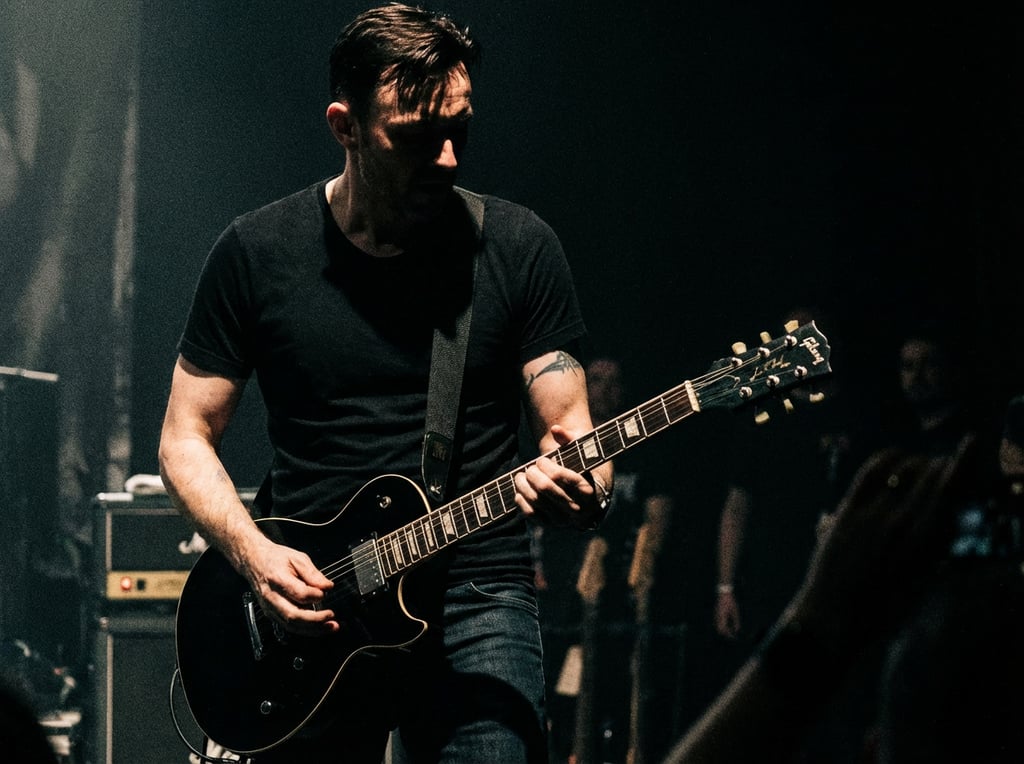
Have you ever seen the video by the musician Mikhael Bennet, or sometimes Michael Bennet? The short video appears to be a clip from the Got Talent show, featuring a rather old country musician. He has an incredibly good voice and sings a highly emotional song about his strained relationship with his daughter. The audience is moved to tears. But something seemed off. The editing seemed off, the footage of him was somehow blurry, his fingerpicking on guitar wasn't quite right, and the voice and the song sounded far too good to have been "discovered" before. And indeed, none of it is real. The person doesn't exist. The singer, the voice, the song—all of it was created with AI and then blended with some actual footage from the show.
At first, I didn't like that. The quality is outstanding and almost indistinguishable from real recordings. If this can be done at the push of a button, then that's a very, very bad thing. Immediately, I thought of the countless bad AI-generated children's books that were constantly offered to me on Amazon when I was looking for reading material for my young son. I fell for one of those once and was deeply annoyed, cursing AI-generated content in the process.
After some reflection and a bit of research, it turns out that it's not that simple. There are incredibly good music generators that can churn out pop songs that are barely distinguishable from what's playing on the radio. Nevertheless, Michael Bennett's music is superior. Behind it are producers who understand music and combine a variety of AI tools to reach that level. So, is a human still involved? Let's hope so! I now believe that AI can create amazing things that are indistinguishable from mass-produced music. But: an AI won't paint the Mona Lisa, nor will it compose a Bohemian Rhapsody. It can mimic creativity, but it cannot be creative itself.
If we look at the music creation process, we unfortunately have to acknowledge that computers have long been a great help. Initially, I thought that AI was on a completely different level and clearly separate from what came before, but it doesn't seem to be that simple. For example: In a DAW (software for creating and mixing music), there are a multitude of plugins. One plugin transforms sheet music into a perfectly imitated guitar sound. It automatically strums the strings in succession and even has a "humanizer" button to make the playing less than perfect. Another plugin recognizes the notes I input and immediately suggests which chords, notes, and compositions would be a good fit. Is this still "real" music-making? Is the "programmer" a musician? Is this AI? My initial impulse was to say AI is when the computer itself replaces the creative process. But when does it do that? When it suggests suitable variations? When it replaces sheet music with realistic-sounding instruments? All of this has been happening for many years without much fanfare.
On a purely technical level, I simultaneously started wondering if AI could be of use to me. Thirty years ago, I was a passionate musician in a band. As was common back then, we had hardly any money, hardly any equipment, and rarely played gigs. But I never lost my love for making music. However, work, children, and family leave me with no time anymore. I rarely play drums, and even less often guitar. My bass and keyboard are gathering dust. I've always dreamed of recording those old songs in truly high-quality studio recordings. For a while, I considered hiring musicians through the platform Fiver. Expensive, but doable. Maybe. But now a completely new possibility might be opening up. Can I use AI to re-record my music so that it sounds really good? I'm not a sound engineer, I don't know much about music theory, and I don't play the instruments very well either. Can AI help me?
... I started experimenting and, after several tests that left me speechless with amazement, I decided to give it a try.
I plan to create three music albums. The first album will recreate the songs I wrote back then using AI help. The second album will remix those songs in a different styles. The third album will contain songs created mainly by the AI, just to see how it compares.
I will document every step of the process here. I'll make the recordings of the original songs available, as well as the steps with all the prompts and tools I use during the creation process. I'm excited to see where this journey leads.
Contact
Telefon
© 2025. All rights reserved.
Alternative music in an alternative way.